

2026 BNP Paribas Open Summit key takeaways
- Resilience amid uncertainty: Speakers noted that despite ongoing uncertainty, the US growth story remains intact – but hinges on central banks’ response to inflation.
- A structurally different rate environment: Panellists noted markets are bracing for prolonged high rates, with fiscal policy, tariffs, and demand reshaping the yield curve.
- Strategic adaptation to volatility: Participants across capital markets and corporate balance sheets are prioritising flexibility, liquidity, and optionality to navigate uncertainty.
- Discipline defines the next phase of dealmaking: The summit reinforced that M&A stays active but more selective and with stronger due diligence and discipline.
- AI – disruptor and opportunity: Industry experts remarked that AI is reshaping sentiment, valuations, and sector dynamics, causing market dislocations and influencing capital flows.


“In a volatile environment, strong partnerships matter more than ever.”
That was the theme that emerged from the 2026 BNP Paribas Open Summit, which featured insightful discussions with esteemed experts against a backdrop of global uncertainty.
The event gathered more than 500 corporate and institutional clients, issuers and investors, serving once again as a focal point for strategic dialogue and practical market insights, alongside the “fifth major” tennis championship in Indian Wells. It provided a productive setting for strengthening connections and exploring new ideas by combining panel sessions with roundtables, private meetings and peer-to-peer conversations.
An uneven US economic outlook
Current events have long shaped conversations at the Summit. This year, speakers expressed the belief that that the US economy’s core growth story remains intact—despite the spike in energy prices and a modest pullback in equities—thanks to:
- Accommodative monetary and fiscal conditions;
- Resilient consumption in the face of macro volatility;
- Hyperscaler capex continues to feed through into productivity.
They emphasised that markets will closely watch the Federal Reserve’s response to inflation driven by elevated energy prices. While the Fed has historically looked through oil shocks, as one speaker notes, a sustained price rise could prompt a more hawkish stance, especially if inflation expectations become unanchored.

❝ The Fed’s textbook response to an energy price shock has been to look through inflation. But following a multi-year overshoot, it could be difficult to sustain that level of confidence. ❞
According to some speakers, the outlook remains constructive but hinges on how the Fed interprets and communicates energy-driven inflation.
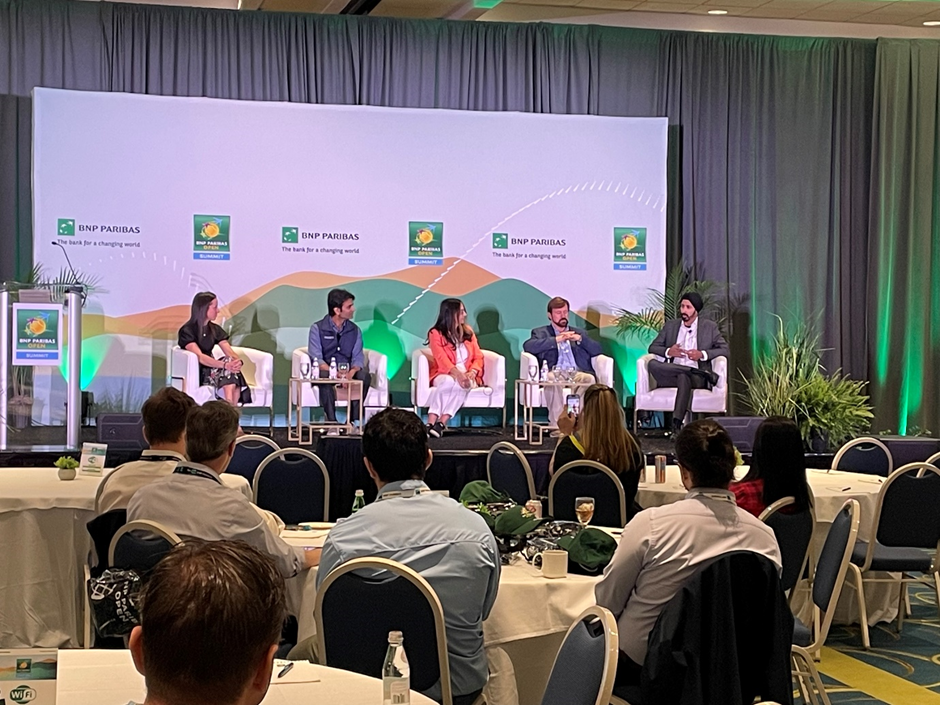
Structural shifts: the yield curve and market dynamics
Some speakers believe a structurally higher rate environment is no longer a tail risk, but a base case. Persistent inflation, heavy IG issuance from hyperscalers, and expanding fiscal deficits in the US and beyond are all contributing to upward pressure across the curve.
They noted that tariffs add another layer to this base case. Policy certainty has improved following the recent reimposition of tariffs, and one speaker said that corporates are more likely to pass higher input costs through to consumers this year. At the same time, they underscored that the temporary nature of current tariffs creates uncertainty around revenue durability, adding pressure on fiscal dynamics, yields, and credit spreads.
Discussing US treasuries, one expert observed that traditional sources of demand, including central banks and foreign investors, are being joined by more price-sensitive buyers, including hedge funds and financial centres deploying relative value strategies. The speaker noted that while this has helped absorb supply, it introduces a more fragile demand base, and policymakers could therefore respond by skewing issuance toward shorter maturities to relieve pressure on term premiums.
Understanding the shape and drivers of the yield curve is becoming as important as the underlying level of rates, according to speakers.

❝ Price-sensitive capital flows, including from hedge fund basis trades, do not appear to reflect a well-supported US Treasury market. ❞
Capital markets in transition
Guest experts and panellists across the 2026 BNP Paribas Open Summit provided practical insights into how issuers are likely to respond to a more volatile market environment with structurally higher rates.
Several panellists suggested the next phase may test capital markets’ adaptability, requiring issuers to balance long-term strategy with short-term agility. Balance-sheet flexibility, including liquidity buffers and funding optionality, remains critical.
At the same time, financing strategies are evolving, with one panellist noting that US corporates are increasingly looking to foreign currency markets for lower coupons, while hybrid capital continues to offer opportunities, with equity-like funding available at relatively tight spreads.
One invited speaker believes volatility is also accelerating product innovation, with issuers moving beyond static payoff profiles toward more dynamic, scenario-sensitive designs in structured products and annuities. They highlighted that volatility-controlled indices, buffers, and income features are helping maintain competitive client outcomes in varying rate environments. Agility in structure and timing is also key in a more volatile climate and a high interest-rate environment.

❝ We’re increasingly seeing US corporates looking to borrow in foreign currency in pursuit of lower coupons and investor diversification. Currency-agnostic funding advice is at the core of BNP Paribas’ debt capital markets franchise. ❞
M&A discipline in a volatile market
Can M&A sustain its momentum in a more volatile environment? Speakers pointed to a strong year for M&A in 2025, with US activity up 68% year-on-year and approaching record highs set in 2021. Some believe that after a robust start to the year, activity has shifted into a more measured phase, with cautious optimism defining the outlook. While deals are still being announced, they are coming to market under greater scrutiny as volatility and geopolitical uncertainty weigh on sentiment.
The impact of volatility varies by sector, with market participants assessing whether it’s a temporary dislocation or structural reset. Deals with strong strategic rationale are still progressing, supported by more disciplined due diligence.

❝ Despite volatility, recent activity suggests that companies are still moving ahead with M&A deals when the strategic rationale is there. ❞
AI market disruption: pricing the unknown
Recent AI-related volatility in public and private markets was a key focus for speakers throughout the Summit.
Panellists emphasised that questions about AI disruption are set to shape market behaviour, with credit markets increasingly being priced by sentiment as much as fundamentals. They pointed out that evidence of earnings erosion or job displacement remains limited so far, despite AI’s transformational potential, although spreads in certain sectors have widened and valuations have fallen, reflecting uncertainty around the pace and scale of long-term disruption.
One guest speaker noted that these shifts have created pockets of dislocation for investors. Differentiated bottom-up analysis, combined with flexibility across instruments, may be key to identifying and capturing opportunities. Read more on the 2026 AI outlook from BNP Paribas.
AI integration: cutting through the noise
Beyond the macro, discussions extended to how firms are integrating the technology at a company level, with attendees noting that the practical implications of new technologies across multifaceted workstreams can still feel abstract.
During one session, an AI expert, advised against waiting for the “perfect” entry point for AI integration, noting the key is to select a small number of high-value use cases. Over the longer term, as technologies and use cases alter traditional ways of working, those with the governance frameworks to certify and deploy new AI capabilities confidently at pace will have the best chance of success.

❝ Many of us are already using AI to automate existing tasks. The real winners will be those who use it to unlock what hasn’t been possible before. ❞
Read the Key Insights Edition 1, Edition 2 and Edition 3 for deep dive into the topics discussed across conferences at the 2026 BNP Paribas Open Summit.
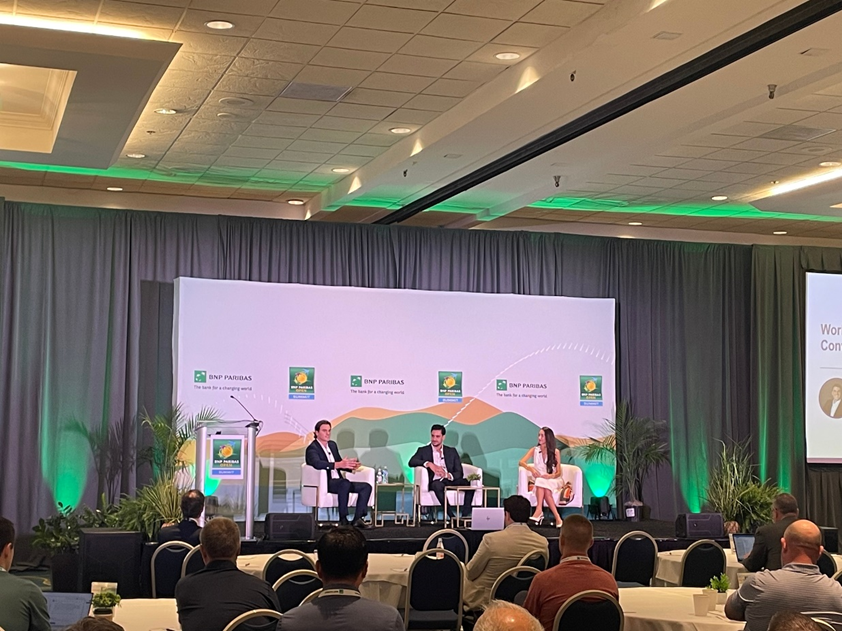
Sector views
According to one guest speaker, private credit growth continues, with investors prioritizing downside protection, liquidity, and diversification. Summit attendees heard that AI exposure is influencing allocation decisions, while portfolios are becoming more balanced. Speakers also emphasised diversified capital formation and resilient capital structures are also key, with a focus on multiple financing channels and liquidity buffers.
Despite geopolitical and economic headwinds, speakers noted that the aviation sector has shown structural resilience, with passenger traffic, revenues, and profitability rebounding to pre-2019 levels. However, speakers also highlighted that the current environment is driving greater selectivity, with investors prioritizing strong governance, alignment, and platform quality. Those that can demonstrate a clear strategy and robust governance are best positioned to succeed in this more discerning market.
Industry experts noted that addressing shifting regulation and geopolitical uncertainty is a top priority for banks. Global deregulatory trends originating in the US, including lower bank capital requirements, require close monitoring. Speakers also highlighted the growing importance of credit risk transfer (CRT) mechanisms to manage balance sheet risk and optimise capital.
Geopolitical fragmentation is creating operational challenges, they said, requiring banks to adapt their models to manage cross-border complexity and guide multinational clients.
Some observed that RIAs are shifting their focus from just product selection to also considering the optimal wrapper and payoff structure for each client’s tax position, risk tolerance, and goals. This is particularly important for retirement solutions, where individuals are taking on more income risk.
Speakers noted that to meet client objectives, advisors need a deep understanding of various products, vehicles, and markets to deliver capital preservation, income, and growth.
According to some panellists, AI-driven demand has transformed data centres into gigawatt-level, quasi-utility infrastructure, with enough development to warrant equity-like returns. Capital structures are becoming more complex, combining securitised products, private credit, and investment-grade backstops to fund multi-billion-dollar campuses.
They emphasized that discipline is critical in the current environment, with investors prioritizing robust agreements, site selection, and credible power strategies to mitigate downside risks. At the same time, issuers are maintaining flexibility through diversified funding sources, strong liquidity buffers, and staggered maturities to ensure they can navigate potential challenges and capitalize on opportunities.
BNP Paribas’ community impact
Beyond the Summit, BNP Paribas’ community outreach during the BNP Paribas Open reflects its long-standing commitment to making tennis more accessible, inclusive and impactful beyond the court.
This year marked a significant expansion of the BNP Paribas Open Scholarship programme with ten USD20,000 grants awarded to exceptional seniors across four high schools in the Coachella Valley. This more than doubles previous years’ support, recognising students’ academic achievements, dedication to tennis and commitment to their communities.
This focus on future talent is also supported by the BNP Paribas Young Talent Programme, which provides emerging players with access to training, funding and opportunities to compete at the highest level. By opening pathways into the professional game, the programme continues to nurture the next generation of tennis stars.
Alongside these efforts, BNP Paribas drives social impact through its Points for Change initiative, which transformed each one of the 27,660 points scored during the tournament into a USD1 charitable donation. We also held a series of ping-pong matches in our client lounge that generated USD5 in donations for every one of the 243 points earned. In total, we raised USD28,875 for Girls on the Run International, supporting programmes that empower young girls by building confidence, leadership skills and healthy habits.
Together, these initiatives highlight BNP Paribas’ holistic approach to community engagement – championing youth development, providing opportunity, and using the global platform of the BNP Paribas Open to create meaningful, lasting impact.
About the BNP Paribas Open Summit
The BNP Paribas Open Summit gathers more than 500 corporate and institutional clients, issuers, and investors for two weeks of high-impact strategic dialogue and dynamic market insight. Across 10 curated conferences, clients engage directly with senior leaders and market specialists to explore the forces reshaping sectors, capital markets and investment decision-making.
As title sponsor of the BNP Paribas Open, we extend the experience beyond the conference room through exclusive relationship-building experiences and community initiatives that reflect our commitment to equity, partnership, and performance at every level of the sport. The BNP Paribas Open – known as the “the fifth Grand Slam” – provides a vibrant backdrop for the Summit, hosted by BNP Paribas Corporate and Institutional Banking (CIB), Americas. Learn more about our client platforms and capabilities across Global Markets, Global Banking and Securities Services at BNP Paribas CIB – The bank for a changing world.
Disclaimer
This material is for informational purposes only and is not intended to be a complete and full description of the products of BNP Paribas and its affiliates or the risks they involve. Additional information is available upon request. Neither the information nor any opinion contained in this material constitutes a recommendation, solicitation or offer by BNP Paribas or its affiliates to buy or sell any security, futures contract, options contract, derivative instrument, financial instrument, or service, nor shall it be deemed to provide investment, tax, legal, accounting or other advice. All opinions, information, and estimates in this material constitute BNP Paribas’ or its affiliates’ judgment as of the date of this material. This material is only intended to generate discussions regarding particular instruments and financing and/or investments opportunities and is subject to change, or may be discontinued, without notice. This material should neither be regarded as comprehensive nor sufficient for making financing and/or investment decisions, nor should it be used in place of professional advice. You should consult your own advisors about any products or services described herein in order to evaluate the merits, suitability, and financial, legal, regulatory, accounting and tax issues raised by any investment and should not rely on BNP Paribas or its affiliates for this. Information contained herein is derived from sources generally believed to be reliable, but no warranty is made that such information is accurate, complete or fair and should not be relied on as such. The offer and sale of securities to institutional investors may only be made through the US registered broker dealer and futures commission merchant entity, BNP Paribas Securities Corp.