

Key takeaways:
- Agentic AI is moving beyond pilots, with financial institutions focused on scaling trusted, governed AI to transform operations, decision-making and client service.
- Digital assets are gaining momentum: achieving scale depends on interoperability, common standards and regulatory alignment across markets.
- The move to T+1 is driving industry-wide operational transformation, requiring automation, standardised data and closer collaboration across the post-trade ecosystem.
- Payments innovation is accelerating, with interoperable infrastructure and tokenized money helping enable faster, more efficient cross-border transactions.
Sibos 2026 brought together over 500 leading voices from across the financial ecosystem in more than 250 sessions on the theme “Digital finance for AI-driven economies”. BNP Paribas experts at the conference shared their perspectives on the trends reshaping the industry, reflecting the Bank’s expertise, and commitment to clients.
Agentic AI is moving from experimentation to enterprise-wide transformation
Artificial intelligence was one of the major topics at Sibos 2026 as participants discussed how agentic AI is reshaping business models, decision-making and client servicing across financial institutions.
Industry leaders highlighted a shift from AI as a technology initiative to AI as a strategic business transformation programme with an increasing focus on deploying intelligent systems capable of orchestrating workflows and supporting complex decision-making processes, while remaining grounded in robust governance frameworks.
Across panels, speakers discussed how organisations can industrialise AI adoption, scale beyond pilots and embed trusted, governed AI capabilities into core banking operations. They also underscored the importance of high-quality data, compliance-by-design approaches and the need to balance innovation with security, transparency and regulatory expectations.

During multiple sessions at Sibos, including a Google Cloud executive panel and Sibos TV interview, Charles Holive, Chief AI Officer, CIB, BNP Paribas, emphasised that “the next phase of AI adoption requires a shift from technology-led experimentation to business-led transformation. The ambition is to build an agentic operating model that combines human expertise with intelligent systems, enabling faster decision-making, more personalised client service and greater operational efficiency while maintaining rigorous governance and oversight.”
Global interoperability and regulatory alignment to scale digital assets
A recurring theme throughout the conference was that fragmentation remains one of the biggest barriers to widespread adoption. With interoperability between platforms, common market standards and greater regulatory harmonisation across jurisdictions increasingly viewed as prerequisites for growth, conversations focused less on whether digital assets will become part of mainstream finance and more on how the industry can scale.
Participants agreed that the goal remains the same for both traditional infrastructure and tokenized assets: trusted, efficient and frictionless movement of value across borders.
Speaking on panels covering digital asset regulation and interoperable digital money ecosystems, Wayne Hughes, Digital Assets Market & Client Engagement Lead, Securities Services, BNP Paribas, highlighted the importance of industry standards, interoperability and regulatory consistency in supporting broader adoption. He noted that “clients are increasingly interested in the practical benefits digital assets can deliver, from 24/7 transaction capabilities to greater efficiency in fund distribution, collateral mobility and cross-border activity.”
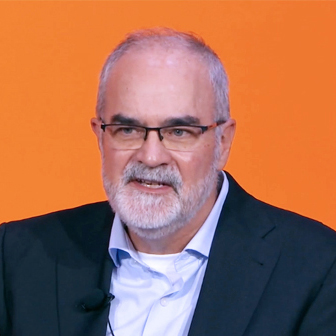
He stressed that achieving scale will require institutions, infrastructures and regulators to work together around common frameworks and standards.
Industry-wide collaboration and holistic redesign are essential for T+1 success
The transition to a T+1 settlement cycle is a comprehensive operational challenge that extends far beyond the point of settlement. While the U.S. migration provided vital lessons regarding client readiness and data analysis, the upcoming shifts in Europe and APAC underscore that shorter cycles impact the entire post-trade value chain, including funding, liquidity, and collateral management.
To navigate this, the conference highlighted the critical pillars the industry must focus on: automating post-trade lifecycles, standardising data to reduce fails, and centralising exception management. While technological advancements like tokenization and digital money may eventually support the future move toward T+0, the immediate priority is to overcome market fragmentation through coordinated testing and enhanced interoperability across all stakeholders.
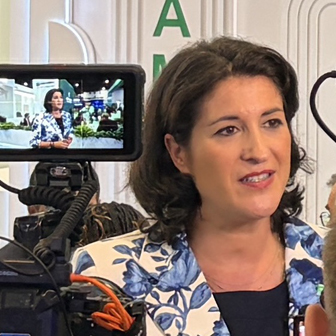
For Marie-France Dessertenne, T+1 Programme Manager, Securities Services, BNP Paribas: “Recognising that the T+1 transition creates ripple effects throughout the settlement chain, we must move beyond isolated readiness and prioritise proactive communication and mutual understanding of our peers’ challenges for collective success.”
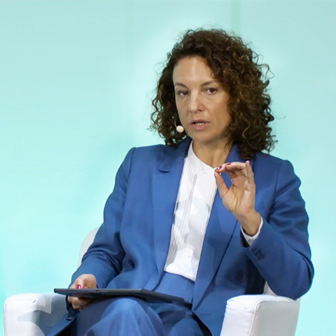
Ultimately, a successful transition requires moving from tactical, manual fixes to fundamental operational transformation. During an industry session on “Making T+1 a reality: standards, data and collaboration”, Camille Papillard, Deputy Head of Financial Intermediaries and Corporates Client Line, Securities Services, BNP Paribas, noted that “T+1 is definitely a settlement redesign, but it’s not only about settlement and it’s mostly about anything but settlement.”
The future of payments to be built on interoperable infrastructure, tokenized money and intelligent orchestration
Innovation in payments featured prominently at Sibos, with discussions focusing on how financial institutions can support always-on, cross-border movement of value in an increasingly digital economy.
A central theme was the growing need to connect traditional payments infrastructure with emerging forms of digital money. As tokenized deposits, central bank digital currencies and stablecoins continue to develop, speakers stressed the importance of interoperability to avoid recreating fragmentation in a new technological environment.
Several discussions explored how common standards can help connect multiple forms of money while preserving trust, resilience and regulatory compliance. The role of shared infrastructures, including initiatives such as the Swift Ledger, attracted significant attention as banks seek to support 24/7 payments, improve liquidity management and enable seamless cross-border transactions.
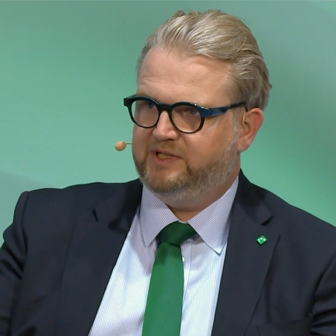
Damien Godderis, Global Head of Payments and Receivables, Cash Management, BNP Paribas, highlighted that “clients are primarily focused on outcomes rather than the underlying technology and real value lies in enabling seamless, instant payments while allowing banks to select the most efficient settlement route.”
Meanwhile, Bruno Mellado, Digital Assets and Payments Group Transformation Lead, Cash Management, BNP Paribas, emphasised “the need for interoperable infrastructure that can combine traditional and emerging payment rails, helping clients move liquidity more efficiently across markets while preserving flexibility, reach and trust.”

Useful links
- Charles Holive panel – watch the full video here
- Towards T+1 in Europe – Securities Services
- Future matters | Enabling digital assets – Securities Services
FAQ
What was the main theme of Sibos 2026?
The conference focused on the industry’s shift toward a more connected, efficient, and resilient financial ecosystem through scalable technology and collaboration.
How is AI changing the banking industry according to Sibos 2026?
The industry is moving toward “agentic AI,” where intelligent systems move beyond simple experimentation to orchestrate complex workflows and support strategic decision-making.
Why is interoperability important for digital assets?
Interoperability and regulatory alignment are essential to overcome fragmentation and allow digital assets to scale within mainstream finance.
What is required for a successful transition to T+1 settlement?
Success requires more than just settlement changes; it demands industry-wide collaboration, automated post-trade lifecycles, and standardized data.