
Key takeaways
- Europe’s energy system requires affordability, sovereignty and security of supply in a far more volatile geopolitical environment.
- The panel’s central message for investors was that the transition will be constrained less by generation technology than by system bottlenecks – especially grids, interconnection, permitting and broader engineering capacity.
- Gas may remain important in the medium term as a system-balancing fuel, but the strategic priority is to accelerate batteries, renewables and electrification so power pricing becomes less exposed to gas price-setting.
- Several speakers highlighted the risk that Europe simply swaps one dependency for another, moving from Russian gas dependence to new dependencies in LNG, batteries, clean-tech supply chains and critical minerals.
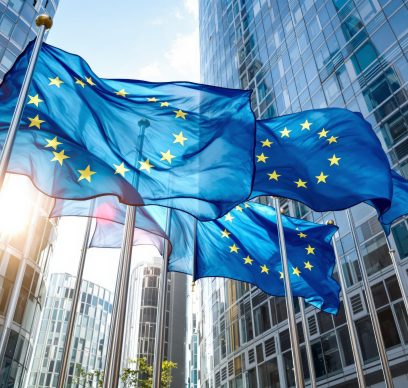
At BNP Paribas Sustainability Expert Forum 2026, experts debated how Europe can secure affordable, clean power without swapping one geopolitical dependency for another.
Paul Hollingsworth, Head of Developed Markets Economics, Markets 360, BNP Paribas, opened the discussion on how Europe can achieve energy sovereignty. Joining him on stage were Séverine Mateo, Global Head of LCTG and Global Head of Energy & Infrastructure, BNP Paribas, Frank Demaille, CEO, Reden Solar, and Bruno Candès, Partner, Infravia.
Europe’s energy transition is becoming more complex. The continent is trying to decarbonise while also reducing its exposure to geopolitical shocks, keeping energy affordable for industry and households and absorbing new sources of demand such as data centres and artificial intelligence. That leaves Europe in a more difficult position than either China, which has prioritised industrial scale and electrification, or the United States, which benefits from abundant, relatively low-cost energy. Against that backdrop, the central question is no longer simply how to add more clean power, but how to build an energy system that is resilient as well as low carbon. Hollingsworth framed the challenge as one of competing pressures that are becoming harder to reconcile.

❝ In Europe, the goals seem to be affordable, clean and secure energy, but against the geopolitical backdrop those three things are in tension. AI is itself becoming a source of energy demand, and we are only just beginning to grapple with the scale and speed of that over the coming years. ❞
Gas still significantly affects the price of electricity in Europe
One reason that challenge remains unresolved is that gas still plays an outsized role in Europe’s power market. Although it accounts for only 20% of Europe’s primary energy, Bruno Candès pointed out that it continues to “fix 60% of the electricity price during the year”, leaving electricity prices unusually sensitive to gas-market volatility. That helps explain why Europe cannot simply remove gas from the system overnight without risking instability. Candès argued that the transition depends on weakening that link over time by scaling renewables, storage, electrification and cross-border interconnection, while keeping the system stable during the shift. It also means energy sovereignty cannot be treated as a generation issue alone, because the wider industrial base behind the transition – from grids and cables to refining, metals and manufacturing capability – matters just as much. In that sense, the sovereignty question does not end with gas: Europe also risks replacing one external dependency with another if key clean-tech inputs and strategic materials remain concentrated elsewhere.
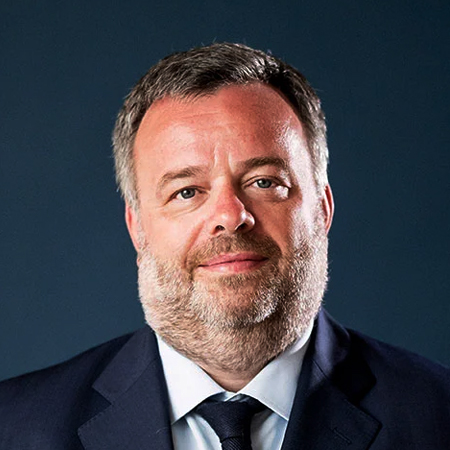
❝ Every geopolitical shock is effectively a wake-up call for Europe to get its act together. It reinforces the need to move faster. ❞
That risk is particularly visible in the clean-tech value chain. Frank Demaille pointed out that batteries, processed materials and other critical inputs remain concentrated outside Europe, particularly in China, raising the prospect that the energy transition creates a new set of strategic dependencies even as it resolves an old one. The challenge for Europe, then, is not just to add more low-carbon generation but to build the infrastructure and industrial capacity that make a more resilient energy system possible.
Grid limitations are setting Europe back
The main obstacles to scale are increasingly systemic rather than technological. Renewable generation is now far more cost-competitive than it was a decade ago, but Europe’s transmission network is struggling to keep pace with the volume of new capacity that needs to be connected and with the broader electrification of the economy. Frank Demaille argued that grid expansion remains slow, permitting processes are cumbersome and local opposition often delays infrastructure development. Batteries can help manage intermittency and improve flexibility, he added, but they do not remove the need for much heavier investment in the network itself or for clearer long-term signals that make projects and risk allocation easier for investors. Demaille’s conclusion was that the economics of renewables are no longer the central problem; the constraint now lies in the infrastructure around them.
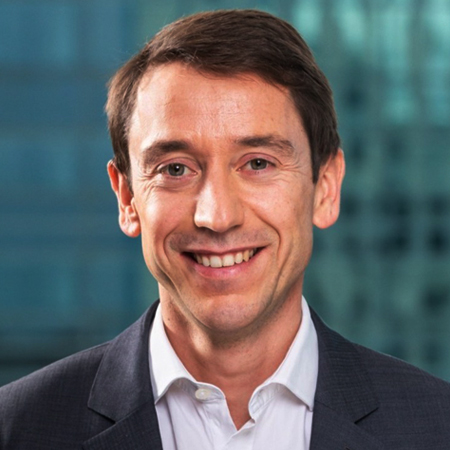
❝ Europe therefore has to be realistic. National policies still matter, but if sovereignty is to mean anything in practice, Europe needs better interconnection, transmission rights and a more coherent cross-border market. ❞
Financing, regulation and the road map to sovereignty
Mateo argued that Europe may be able to mobilise funding for individual energy assets, but the scale of capital expenditure now required across grids, storage, generation and wider enabling infrastructure is far greater than in earlier phases of the transition. That creates a more complex investment problem: capital has to be deployed across several parts of the system at once, often under different regulatory and revenue models. This will require more flexible financing structures, including long-term revenue models for storage, debt instruments suited to hybrid projects and regulatory treatment that recognises the strategic importance of upstream supply-chain assets as well as end-generation capacity. Stable tariff frameworks and clearer regulation will also be critical if long-term capital is to move at the speed and scale required.

❝ That also requires stable regulation and tariff frameworks that allow long-term capital to be deployed with confidence. Europe can solve this, but it needs to act collectively and fast. ❞
The panel concluded with a shared sense that Europe can still achieve true energy sovereignty, but only by confronting three intertwined fronts: a pragmatic gas bridge, a dramatically upgraded transmission network and an indigenously built critical-materials value chain backed by flexible, long-term financing.
As Mateo put it, energy sovereignty is about “not swapping one external dependency for another” but building a more resilient, diversified and home-grown energy ecosystem. If the continent can align policy, industry and capital around that vision, the coveted trifecta of affordable, clean and secure energy may finally move from aspiration to reality.