

Almost exactly a year ago, the Republic of Slovenia became the first eurozone sovereign to issue a digital bond. Part of the Eurosystem’s wholesale digital settlement trials, the bond was arranged and placed by BNP Paribas as DLT market operator on its Neobonds platform, BNP Paribas Asset Management and ALM Treasury were among investors for the transaction. The EUR30 million issuance was followed by secondary market activity with investors AXA IM on behalf of AXA France, Banque de France and the European Investment Bank (EIB).
At BNP Paribas’ 2025 Global Official Institutions Conference (GOIC), panellists took a deep dive into this example of digitalization in action, took stock of the lessons learned and looked forward to the future for digital bonds.

❝ The bond market has been with us in some form since around five centuries before the common era and we’ve had many milestones, but there is another big topic coming and it’s already with us. The technology works, the future is already here and ready for us to use. ❞

Question: As the first Eurozone sovereign to issue a digital bond, what were the main benefits and challenges?
Marjan Divjak: Main benefits for us, was really the learning process we went through. We learned a lot about these new, and impressive technologies.
Question: What role is Banque de France playing in the development of wholesale digital currency?
Emmanuelle Assouan: The role of Banque de France is innovation and pioneer in the wholesale CBDC provision, as a settlement asset in a tokenized, financial world. And the outcome is that it works, we can provide central bank money, wholesale CBDC in a tokenized world, and DLT and blockchains do provide real benefits for settlement efficiency, cost, and speed perspective in financial markets.
Question: From an investor perspective, what are the lessons learned from the European experimentation programme?
Laurence Arnold: So, first of all, it’s really about our teams and how to onboard them in all of this experimentation journey. Those experimentations also enable us to give proper feedback to the regulators, to all the market associations, to the banks we work with, to our clients. We need cash on chain, we need a settlement asset, a settlement mean to be able to have the full post-trade chain. And we need all to push for it as an ecosystem.
Question: What is BNP Paribas’ approach to digital innovation in capital markets?
Amelie Fremy: So, BNP Paribas has been extremely involved in any new technology coming in. We’ve seen that with traditional AI, and generative AI, and now blockchain. Very early and more than three years ago we developed within Global Markets our own tokenization platform because the intention was to learn by doing and really to, by ourselves, test the benefits, see what will be the implications, the impact, and how we will need to change, not only our technology, but also our infrastructure and our processes.
Question: What do you see as current market challenges and what can be done to overcome them?
Laurence Arnold: Today, the biggest challenge is that a very automated technology brings absolutely manual work to our team. So, when it gets to investing in a tokenized bond, so we need to be able to have a seamless investment, meaning that all the post-trade processes have to be automated via blockchain technology. So, we need to progress on the foundations, we need to progress on the cash, and, in the end, there’s also a lot of legal burden, and we need to find a way to make things clear. Probably through regulation, but in the end, if we get there, it would be very efficient for the markets.
Question: What are the next steps at European level for wholesale digital currency tokenization to leverage the technology?
Emmanuelle Assouan: So, 2020 Banque de France launched an experimentation programme. We made quite a series of experiments. 2024, the Eurosystem all together, we made a year of experiments like 50 of them. 2026, we will provide a first pilot in real life, of wholesale CBDC, so central bank money in a tokenized form, which will perform settlement functions in order to settle financial transactions for tokenized financial assets.
Later on, we will try to achieve one important aspect that should serve additionally and, even better, the SIU, our internal market, which will be to provide a European ledger where commercial bank assets, settlement assets, Central Bank money, our wholesale CBDC, but also financial assets, will be brought together in order to facilitate the settlement of the financial assets, the European financial assets at the European level, within a unified and unique European ledger.
Question: Does blockchain have the potential to revolutionise financial markets?
Amelie Fremy: By developing Neobonds and by integrating Neobonds within our Global Markets infrastructure, we had the opportunity to test, what would be the benefits for capital markets and financial industry. It will allow to reduce the various processing and all the intermediaries currently involved in the life cycle of a bond during the transaction of a bond, and we have seen a lot of cost savings associated to it. Also, the instantaneous settlement will reduce counterparty risk and settlement fails. So, lots of benefits and indeed, great opportunities for the financial industry.
Question: What is needed to scale up this solution and unlock full benefits of digital bonds?
Marjan Divjak: To scale up this process is to actually ensure interoperability and not only across chains and systems and clearing, and settlement system, but above all across, traditional and new technologies.
Question: Will tokenized asset technology provide a competitive edge for investors?
Laurence Arnold: It’s not a competitive advantage as such in terms of creating new products, but it’s really how to bring operational efficiency to our organisation. It’s also bringing better quality to our clients, better investments, quicker investment with less risks.
Question: What are the opportunities in the context of renewed impetus towards a European Investment and Savings union?
Emmanuelle Assouan: All the benefits that we have tested in our experimentation programme, all show that we have a lot of value added in what we want to perform with the Savings and Investment Union, so make the technology as a blockchain technology, usable and used at the European scale directly and better serve a lot of different financial markets, which will be very useful in order to finance the twin transitions, the green transition and the digital transition.
Question: What innovations can we expect from Republic of Slovenia going forward?
Marjan Divjak: We will be very pleased to continue helping or participating in these experimental programmes. But, apart from this, we are contemplating to issue a sustainability-linked bond of Slovenia.
Question: What are the next major market developments in your view?
Amelie Fremy: Now we are waiting for the news. We are waiting for the time frame, and when ECB will provide on a more scalable way some Central Bank digital money. So short term, I’m thinking that with the US news, and what’s happening in the US currently, with a new regulation around stablecoins, the traction around stablecoins might have a knock-off effect on the digital bond process, and might incentivise issuers to benefit from it, and to issue, a bit more digital bonds.
The future is now
The Republic of Slovenia boasts a history of innovation with a pioneering approach to its financial management. Speaking at this year’s GOIC, Marjan Divjak, Director General Ministry of Finance Treasury Department, Republic of Slovenia, traces the origins of the recent digital bond issue back 13 years: “In managing sovereign debt during a period of credit rating downgrades, we needed to look beyond standard debt instruments and pursue innovative funding solutions. This not only enabled us to execute our funding strategy effectively under conditions of limited market access but also allowed us to strategically recycle/reduce and manage the risks we had taken on.”
Fast forward to 2025 and the sovereign issuer has an AA rating from S&P and is pioneering the future: “Constantly pursuing groundbreaking solutions, we were able to reduce our funding needs by around 40% between 2022 and 2024. We found a strong banking partner in BNP Paribas, with its innovative approach.”
Drawing on this long history of innovation, the Republic of Slovenia unlocked a solution – in collaboration with Banque de France, BNP Paribas and AXA IM – that Marjan Divjak sees as the future of the capital markets: digital assets.
“We can settle with less risk, work faster, offer 24/7 service and diversify the investment base. More trials will be needed, but this first attempt shows how technology can be instrumental for more efficient real-time markets. By settling transactions on-chain, market participants gain real-time visibility into activity on the secondary market, enabling continuous transparency and a clearer understanding of market dynamics at all times.”
Looking to the future, Marjan Divjak notes that the next – and ideal – step would be to engage in another trial or to sell a portion of a conventional bond, subject to investors’ interest in converting that tranche into a tokenized bond, thereby enabling a hybrid structure that bridges traditional and digital issuance models.
“The future in the sector lies in achieving efficient interoperability between traditional clearing and settlement systems and their digital counterparts.”
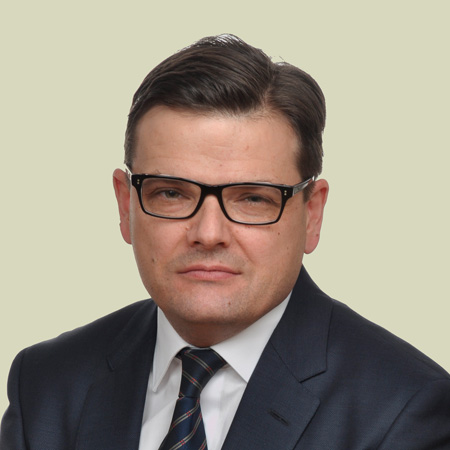
❝ Constantly pursuing groundbreaking solutions, we were able to reduce our funding needs by around 40% between 2022 and 2024. We found a strong banking partner in BNP Paribas, with its innovative approach. ❞
Instrumental role of a central bank
Banque de France launched its programme five years ago, developing blockchain technology to provide central bank money in tokenized form. The central bank played a fundamental role in providing the digital euro and as an investor in the Republic of Slovenia issuance.
Emmanuelle Assouan, Director General Financial Stability & Operations, Banque de France, speaking at GOIC 2025, commented: “We wanted to explore the potential benefits of blockchain and tokenized financial assets – are they faster, less costly and do they bring greater settlement efficiency? The only way to address these questions was to conduct experiments to ensure we could provide the safest money possible.”
With this goal in mind, the Eurosystem, comprising the European Central Bank (ECB) and national central banks, conducted a series of tests using distributed ledger technology (DLT) for wholesale settlement in central bank money between May and November 2024, processing over 200 transactions and a total value of EUR1.59 billion. Banque de France’s full DLT interoperability/DL3S solution, Banca d’Italia’s TIPS Hash-Link Solution and Deutsche Bundesbank’s Trigger Solution were all tested during this programme.
Having actively driven numerous pioneering experiments since 2020, the Banque de France tokenized cash solution was used for on-chain settlement of the Republic of Slovenia’s digital bond – the only on-chain solution tested – and the French central bank acted as investor in the secondary market.
“We were pleased to have a twofold perspective – investing and providing the tokenized cash solution. This experiment demonstrated the benefits of having the financial markets systems under one set of infrastructure, and interoperability will really be the priority to unlock the full benefits of wholesale CBDCs.”
The benefits are multiple: “Blockchain could help with smart contracts, provide transparency, and ensure automated and more enhanced registries. Many central bank experiments are being conducted to support this development, and the Banque de France looks forward to playing its part in making Europe as integrated as possible as we build the Savings and Investment Union together.”
Emmanuelle Assouan noted the importance of maintaining the previous legacy developments in the new tokenized world to uphold financial stability. This will mean preserving the interoperability of legacy systems for mainstream financial assets with the tokenized system. Experiments continue to support this aim and limit fragmentation between the different blockchains, with the Banque de France playing its role to make the tokenized world very concrete and very safe in Europe.
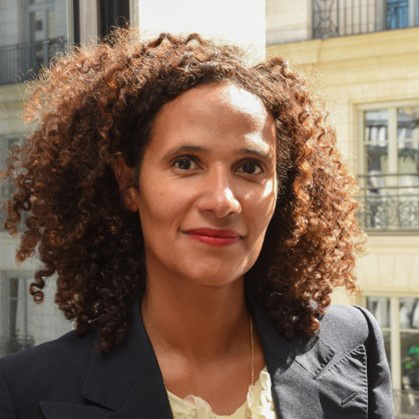
❝ Banque de France looks forward to playing its part in making Europe as integrated as possible as we build the Savings and Investment Union together. ❞
An investor viewpoint
One of the investors in the Republic of Slovenia’s digital bond issue, AXA IM, has consistently pursued technological innovation and started to look at issuing fund shares on the blockchain over a decade ago. Over the past five years, teams have worked on digital bonds to explore the value and benefits brought by this complex technology.
Speaking at GOIC 2025, Laurence Arnold, Global Head of Innovation, Client Operations, Reporting and Performance, AXA IM – Part of BNP Paribas Group, noted: “Experimentation is crucial to harness the full benefits of blockchain and allow teams to learn. We have been testing across the full range – private and public blockchain, primary and secondary market, normal cash and central bank money, as well as stable coins. We are not yet there, but the potential benefits are there, and we will continue to work with market participants to build the financial markets of the future.”
She continues: “Investing in such security tokens reintroduces operational risk at this stage, as this new post-trade process is done manually, due to a lack of integration and shifts in responsibilities. Investing in digital bonds is a different process to the traditional framework and therefore requires major involvements from all key functions (Portfolio management, trading, legal, compliance, operations, risks, IT security etc.) which hinders an automated execution at this stage (both traditional and digital worlds coexist).”

❝ Experimentation is crucial to harness the full benefits of blockchain and allow teams to learn. We will continue to work with market participants to build the financial markets of the future. ❞
Throughout the process, collaboration is essential: “For us, it’s learning, training our teams and building knowledge to feedback to issuers, banking partners and central bank regulators so we can see altogether how to move in. It’s not just about one institution, it’s a whole ecosystem of technology and no one can move forward without the others.”
Once again, interoperability will be the key to ensure a unified and automated system and have the full benefit of atomic settlement and where the ledgers are distributed.
Innovating with a strong banking partner
Banks will have a crucial role to play in this technological shift. BNP Paribas played an active part in the Eurosystem’s wholesale digital settlement trials, engaging in real and test transactions with Banque de France, Deutsche Bundesbank, and Banca d’Italia, one of the only banks to test all three.
The Bank arranged and placed the Republic of Slovenia’s digital bond issued under the programme, acting as DLT market operator on the Neobonds platform.
Amélie Fremy, Chief Operating Officer, Innovation & Digital Assets, Global Markets, BNP Paribas, said: “We were approached by issuers several years ago and as a result launched our tokenization programme at Global Markets, integrated directly into our technology and book-building systems. We issued a first bond two years ago for our Treasury department.”
This preparatory work put the Bank in a strong position to participate in the Eurosystem experimentation programme in 2024. Amélie Fremy continued: “You have to learn by doing, which is why we were delighted to test all three solutions in the Eurosystem programme. Each issuance brings new learnings and helps identify the benefits as well as the steps needed to scale up this technology.”
The development of this technology requires time: “For now the technology is still nascent. Sophisticated investors are interested and took the time to understand and ask questions. Onboarding teams, developing the legal documentation and understanding the implications from a regulatory standpoint all take time, but we are convinced that the blockchain can bring a lot of value to the industry. As a leading bank, we have a crucial role to play in supporting the modernisation of the financial markets.”

❝ We were delighted to test all three solutions in the Eurosystem programme. Each issuance brings new learnings and helps identify the benefits as well as the steps needed to scale up this technology. ❞