

Key takeaways
- As structural uncertainty reshapes the global landscape, dialogue, partnerships and long-term thinking have become essential pillars of global economic resilience.
- The next phase of global growth hinges on the ability to mobilise private capital at scale for development and transition goals.
- From sovereign debt to digital money, financial markets are entering a new era of investment, where resilience, diversification and innovation are redefining capital allocation.


Laurent Lévêque, Global Head of Official Institutions Coverage, BNP Paribas: Welcome to the 20th anniversary of the Global Official Institutions Conference.
Sandrine Ferdane, Global Head of Financial Institutions Coverage, BNP Paribas: It is the 20 years of the GOIC Conference. We are here in Paris and we gather our key clients from the public sector ecosystem, from Central Banks, Development Banks, Sovereign Wealth Funds. We run panels, we discuss policies and the topics that are shaping the global economy.
Orlando Ferreira, Chief Financial Officer, IDB Invest: It’s a great privilege to be here for the third time, actually. It’s a great opportunity to meet like-minded professionals, even to talk to our own peers in the MDB world, which we don’t always get to interact as much, but to have this forum where we can actually share experiences and learn from each other has been extremely useful over the years and certainly this year in 2026.
Emmanuelle Bury-Lucas, UK Country Head, BNP Paribas: I think it’s a great opportunity for leaders from both the private and the public sectors to come together, and also from different regions of the world, in such a critical time, where it is paramount to confront different views in order to make better-informed decisions.
Coralie Billmann, Managing Director, Circle: It’s a great opportunity to meet everyone in the same place, with nice panels and a nice mix of bankers, central bankers and also private sector companies, all together in one place to talk about innovative technologies, and again, at Circle, this is really what matters, and this gives us the opportunity to really present what we do and how we can fit in this new ecosystem.
Laurent Lévêque, Global Head of Official Institutions Coverage, BNP Paribas: We just finished the conference, and I have to say it’s been two very good days spent with you, our clients. We talked about a lot of things: issuances, asset allocation. We talked about digital currency, talked about defence, talked about innovation. It’s been very successful. A lot of discussions as well, with all of you, and I look forward to next year’s edition. Thank you very much.
The 20th edition of BNP Paribas’ flagship Global Official Institutions Conference (GOIC) took place in Paris on 18 and 19 June 2026, bringing together nearly 120 senior representatives from central banks, debt management offices, sovereign wealth funds, multilateral development banks, global official institutions and leading financial market participants from around the world. This year’s edition provided a platform for policymakers, investors and market participants to exchange perspectives on global economic resilience, financial markets and the structural forces shaping the next phase of global growth.
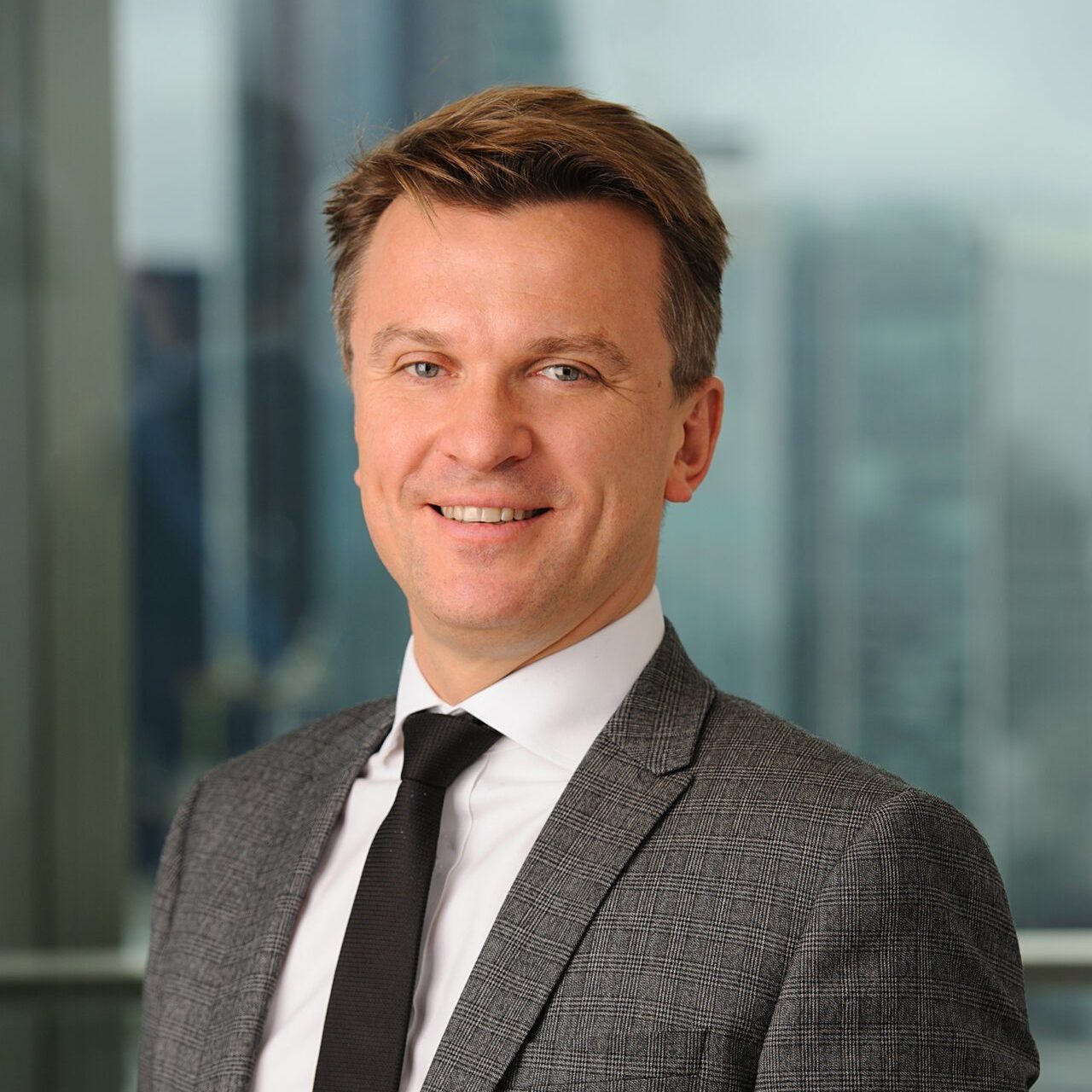
❝ As we mark the 20th anniversary of BNP Paribas’ Global Official Institutions Conference, one message stands out clearly: in a world where uncertainty has become structural rather than cyclical, dialogue, partnership and long-term thinking are more important than ever. ❞
Held against a backdrop of heightened geopolitical tensions, rapid technological change and profound economic transformation, the conference explored how global official institutions are adapting to a world increasingly shaped by strategic competition, investment needs and shifting patterns of global interdependence.
Global economic resilience in a fragmented world
A key theme throughout discussions was global economic resilience despite successive shocks. Speakers highlighted that while geopolitical fragmentation, energy security concerns and trade tensions continue to create uncertainty, they are also accelerating investment in strategic sectors, notably electrification, digital infrastructure, artificial intelligence and defence. Several sessions emphasised that the world is entering a more investment-led phase, characterised by unprecedented financing requirements and new opportunities for public and private capital mobilisation.

❝ The resilience of the global economy will depend not only on its ability to absorb shocks but also on its capacity to innovate, invest and adapt to an increasingly complex environment. ❞
The conference also examined the re-emergence of global imbalances and the changing macroeconomic landscape. A leading economist warned that global imbalances are widening again and remain a key source of risk for sustainable growth, with potential implications for financial stability and trade tensions. A senior policymaker cautioned that despite the resilience of financial markets, rising debt, inflationary pressures and geopolitical tensions are increasing the risks of destabilisation. Discussions underscored the persistence of structural vulnerabilities and the need for stronger international cooperation and policy coordination to preserve financial stability and support sustainable growth.
Financing the next phase of global growth
Another central theme was the transformation of development finance. Speakers highlighted the growing financing challenges faced by emerging and developing economies in an environment of declining official development assistance and increasing demands on public resources. A senior representative from a major development institution noted that the next phase of global growth is increasingly driven by emerging markets, yet the challenge remains to better align capital with investment needs.
Particular attention was devoted to the evolving role of multilateral development banks (MDBs), which are increasingly leveraging financial innovation, risk-transfer mechanisms and partnerships with institutional investors to mobilise private capital at scale and channel investment towards development and transition objectives. An MDB expert noted that the key challenge is not a lack of capital, but structuring it in a way that is scalable, diversified and supported by credible data to give investors the confidence to participate at scale.
Shifting dynamics in financial markets and sovereign debt
The conference further explored the rapid evolution of financial markets and investment strategies. Sessions addressed changing reserve management practices, the growing role of diversification and alternative assets, the future of digital money and tokenised finance, and the increasing importance of resilience, liquidity and governance in investment decision-making. A digital payments expert noted that as payments shift towards 24/7 models, the priority is not which form of digital money will prevail, but ensuring seamless interoperability across systems while maintaining trust, security and financial stability.
Discussions on sovereign financing highlighted the resilience and growing sophistication of emerging market debt. Once regarded as a tactical allocation, emerging market sovereign debt is increasingly viewed as a structural component of global fixed-income portfolios, supported by improving policy frameworks, broader investor participation and greater differentiation among issuers. According to a CEEMEA market expert, emerging market debt is now perceived as a resilient asset class, supported by disciplined issuers and robust market access.
Finally, the conference devoted significant attention to Europe’s strategic priorities. Participants examined how Europe can mobilise capital to finance defence capabilities, strengthen industrial resilience and preserve strategic technologies, while also advancing energy transition objectives and supporting innovation-led growth. In this context, an expert on Europe’s defence value chain highlighted the need to build a true continuum of financing for defence – from public support to private capital and market solutions – to ensure that the entire ecosystem, especially SMEs, can scale effectively.
Across all sessions at the Global Official Institutions Conference 2026, a common message emerged: despite an increasingly complex and fragmented global environment, abundant global savings, technological innovation and financial ingenuity continue to create significant opportunities. The key challenge for policymakers, global official institutions and investors is to build the frameworks, partnerships and market infrastructures necessary to channel capital efficiently towards long-term strategic priorities and sustainable economic development.
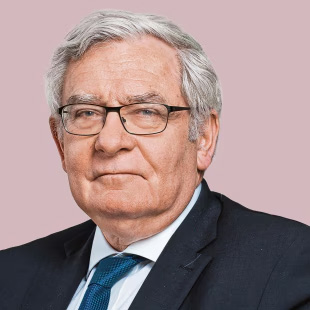
❝ We are not witnessing the end of globalisation, but the emergence of a new phase in its evolution. In a more fragmented and uncertain world, the challenge is to build new balances through investment, innovation and resilience, while preserving openness and our capacity to cooperate. ❞


